 Add Row
  Add
Add 


Did you know? By 2025, companies harnessing personalization with AI marketing could see profits leap by as much as 15%—a game-changing statistic that’s shaking up the marketing world. In today’s crowded digital landscape, AI-powered personalization isn’t just a trend; it’s your secret weapon for skyrocketing sales and customer loyalty. This comprehensive guide unpacks how AI-driven tactics are revolutionizing personalized marketing to deliver the right message to the right person, every single time.
Unlocking Growth: The Transformative Power of Personalization with AI Marketing
The move toward personalization with AI marketing is transforming how businesses connect with consumers, creating interaction and engagement at an unprecedented scale. Modern marketing strategies now center on individualized experiences, enabled by powerful AI algorithms that analyze vast amounts of customer data in real time. Companies leveraging these innovations are not just improving customer satisfaction—they’re exceeding expectations, driving up conversion rates, and seeing measurable returns. From tailored product recommendations to dynamic social media campaigns, AI personalization is fueling business growth.
This shift is more than technological; it’s a strategic overhaul. Brands that adopt powered personalization deliver seamless journeys across all touchpoints—website, email, social media, and customer service. As customer expectations rise, generic campaigns fall flat. Highly targeted, personalized marketing campaigns outperform traditional ones, thanks to machine learning and predictive analytics. Personalization with AI marketing isn't just the future—it's the present, and it's available to brands ready to lead in customer experience.

"By 2025, companies using AI-driven personalization will boost their profits by up to 15%." – McKinsey
What You'll Learn About Personalization with AI Marketing
- Fundamentals of personalization with AI marketing
- Key AI personalization technologies and tools
- How AI-powered personalization enhances customer experience
- Best practices for leveraging customer data and machine learning safely
- Real-world examples: From product recommendations to dynamic content
- Strategies for implementing successful personalized marketing campaigns
- Future trends: Generative AI, chatbots, and data privacy
Understanding Personalization with AI Marketing
At its core, personalization with AI marketing means creating unique, relevant marketing experiences for every customer by leveraging artificial intelligence and advanced analytics. Unlike traditional segmentation, AI personalization drills down to individual preferences, behaviors, and purchase history. Companies that use AI tools can analyze massive, varied customer data sets—everything from shopping habits to interactions across platforms. This vast data pool empowers brands to send precise, contextually relevant product reco and recommendations, automate personalization at scale, and increase the relevance of every customer engagement.
Personalization with AI marketing offers capabilities far beyond what manual methods or simple automation can achieve. By employing machine learning and smart algorithms, brands can anticipate customer needs and deliver experiences that feel uniquely tailored to each person. This personalization boosts conversion rate, enhances customer experience, and strengthens brand loyalty by making customers feel understood and valued. In today’s market, powered personalization is not just a competitive advantage—it's a necessity for businesses aiming to stay ahead.

Defining Personalization with AI Marketing: What Makes It Unique?
AI personalization stands out by transforming how brands interpret customer data and respond in real time. Traditionally, marketers would segment their audience by age, gender, or geography. Today, AI-powered personalized marketing looks deeper, analyzing behaviors, website navigation, purchase patterns, and even engagement with social media and customer service. Machine learning models process this data instantaneously, adapting recommendations, offers, and messages for each unique user. What’s more, generative AI now enables the creation of entirely new, custom content based on customer interactions, ensuring each experience is fresh and relevant.
Another distinctive feature is the ability to test and optimize on the fly. AI tools can launch multiple campaign variations, analyze which personalized experiences yield the best response, and adjust delivery in real time. The result is a continuous feedback loop, fine-tuning each interaction for maximum impact. In essence, personalization with AI marketing doesn’t just automate marketing tasks—it intelligently personalizes every aspect of the customer journey, setting the standard for next-level customer experiences.
The Evolution of AI Personalization in Customer Experience
The journey of AI personalization began with basic email customization and rule-based recommendations. As technology advanced, marketers embraced smarter, self-learning systems capable of digesting vast amounts of customer data and making predictive decisions. Today, leading retailers, streaming services, and e-commerce platforms depend on artificial intelligence to deliver super-relevant messaging, product recommendations, and content at each stage of the customer journey. With each iteration, AI technology grows more efficient, learning from every interaction and continuously improving.
This evolution has also impacted the very nature of customer experience. Instead of treating shoppers as segments, brands now engage with individuals, offering tailored experiences across digital channels. The rise of powered personalization has shifted expectations—for both customers and businesses. Customers now expect brands to predict needs, solve problems, and provide personalized interaction at every touchpoint—making AI essential to any meaningful customer experience strategy today.
Key Benefits: Boost Customer Experience and Conversion Rate
Personalization with AI marketing unlocks a host of benefits that propel business growth. First, AI-driven marketing strategies significantly enhance customer experience. By analyzing purchasing behavior, engagement level, and feedback, AI can curate unique content and product reco, ensuring each interaction feels personal and valuable. This not only increases satisfaction but drives repeat business by building emotional loyalty. Customers who feel understood are more likely to trust the brand and make additional purchases, directly improving conversion rate.
Additionally, powered personalization allows for precision marketing campaigns—minimizing wasted ad spend and maximizing ROI. AI optimizes marketing messages based on real-time trends, so you’re always one step ahead of changing preferences and market dynamics. Ultimately, businesses see stronger customer engagement, higher average order values, and improved retention—all while reducing manual workloads, thanks to automated AI tools and machine learning solutions.
Core Technologies in Personalization with AI Marketing
The backbone of personalization with AI marketing lies in sophisticated technologies that empower brands to deliver hyper-relevant experiences. From advanced machine learning systems that decipher patterns in customer data, to dynamic generative AI creating brand-new content on demand, today’s AI toolkit is more robust than ever. Data integration platforms bring together disparate data sources—web, mobile, social media—to build a unified customer profile. Together, these tools automate analysis and delivery, driving the next wave of personalized marketing effectiveness.
Crucially, as brands rely more on AI-powered solutions, understanding the differences between artificial intelligence, generative AI, and traditional automation becomes increasingly important. Each offers unique capabilities, but only together can they provide the depth and adaptability needed for truly personalized experiences. In the sections below, we’ll explore these technologies and how they come together to drive customer experience and conversion.
Machine Learning: The Engine Behind AI Personalization
Machine learning is at the heart of all effective AI personalization. Unlike rule-based automation, machine learning algorithms learn from every customer interaction—constantly refining predictions and recommendations. Whether identifying which products to promote or determining the ideal send time for a marketing campaign, machine learning delivers insights that human marketers can’t match at scale. Powerful models digest real-time data streams from emails, site visits, social media, and even customer service channels, adapting offers and communications instantly based on current behavior and past preferences.
With every new data point, these AI algorithms grow smarter. The result? Enhanced targeted marketing, higher conversion rates, and a better overall customer experience. Marketers are now able to predict what a customer wants before they explicitly ask for it, enabling seamless, proactive engagement. As machine learning becomes more accessible, even small and medium-sized enterprises can tap its potential, using affordable AI tools to deliver personalization at enterprise scale.

Artificial Intelligence vs. Generative AI: What Drives Powered Personalization?
While artificial intelligence encompasses the broad field of computer systems simulating human intelligence, generative AI zeroes in on content creation—text, images, videos—based on learned patterns from massive datasets. For powered personalization, combining traditional AI with generative AI is a game changer. Artificial intelligence can segment customers, predict trends, and automate tasks, while generative AI crafts unique content that matches each user’s interests—think dynamic email bodies, personalized blog intros, or even AI-created videos showcasing products a user is likely to love.
This powerful combination is transforming how brands engage audiences. Used together, they provide a 360-degree personalized experience—addressing both what to say and how to say it in a way that resonates. Brands using these advanced AI tools can now orchestrate individualized journeys at scale, setting new standards for customer experience and marketing effectiveness. As these technologies continue to converge, expect even more innovative tactical solutions for personalized marketing in the near future.
How Customer Data Fuels Personalized Experiences
Effective personalization with AI marketing hinges on quality customer data. Information from purchase history, web behavior, app usage, and social media feeds into centralized databases, creating detailed profiles for analysis. By utilizing this data, AI models personalize everything from product recommendations to individualized marketing messages, delivering tailored experiences that drive higher engagement. The more accurate and robust your customer data infrastructure, the more relevant your personalization efforts become.
But simply collecting data isn’t enough. Marketers must have the right tools and strategies to integrate, cleanse, and analyze data from various sources. AI algorithms can quickly process vast amounts of information, identifying hidden trends and predicting customer needs. This data-driven approach not only enhances immediate marketing efforts but also enables long-term relationship-building, as communications grow more contextual and meaningful over time. The key is balancing effective personalization with trust, ensuring data privacy and transparency while maximizing the value of every customer interaction.
Building Superior Customer Experiences with AI Personalization
Brands that excel in personalization with AI marketing don’t just boost sales—they deliver memorable, differentiating customer experiences that inspire loyalty. True powered personalization goes beyond calling a user by name: it anticipates needs, addresses pain points, and consistently delights at every interaction. From dynamically updating websites to AI-powered chatbots available around the clock, every touchpoint offers an opportunity to reinforce brand value and deepen customer relationships.
Superior customer experiences rely on orchestrating personalization across all channels—website, email, mobile app, and social media. AI marketing tools make it possible to create a seamless, cohesive experience tailored to each user’s journey. Whether it’s customized product reco in real time or proactive customer support, the right personalization strategy turns single purchases into lasting relationships and sporadic users into passionate brand advocates.
Personalized Marketing Tactics That Drive Results
The most powerful personalization with AI marketing tactics blend sophisticated analytics with creative content tailored to individual users. For starters, dynamic email campaigns use AI tools to send unique subject lines, product recommendations, and special offers based on a recipient’s past engagement. Similarly, on-site personalization adapts landing pages and product reco in real time, providing each visitor with a journey built just for them. AI-driven social media campaigns retarget users across platforms, maintaining a consistent message while optimizing for channel-specific engagement.
Another game-changer: integrating powered chatbots and AI-powered customer service. These AI tools offer immediate, personalized responses to questions, product reco, and troubleshooting needs, improving conversion rate and customer satisfaction. AI also enables highly targeted advertising, serving unique messages based on user behavior, location, and predicted interests. Taken together, these tactics not only capture attention but convert interest into measurable business results.
Personalized Experiences Across Social Media and Product Recommendations
Today’s consumers expect a seamless, personalized experience across social media, e-commerce, and beyond. Leading brands apply AI personalization to craft individualized product reco, tailor ad messaging, and serve dynamic content on platforms like Instagram, Facebook, and TikTok. AI analyzes engagement patterns—likes, shares, comments—to refine messaging and display relevant product reco that match the user’s real-time interests. The result? More effective campaigns, optimized conversion rates, and a stronger connection with digital audiences.
In e-commerce, personalization with AI marketing powers recommendation engines that drive upsell and cross-sell opportunities. By tracking browsing history and purchase patterns, AI suggests additional items that align with customer preferences. Whether on a website, in a mobile app, or via personalized email campaigns, these recommendations feel timely and helpful—boosting satisfaction and sales without feeling invasive. Brands that master this cross-channel personalization win customer loyalty by making every interaction relevant and rewarding.

Increasing Conversion Rate Through Personalization with AI Marketing
Conversion rate is the ultimate measure of a marketing strategy’s effectiveness. AI-powered personalization has a proven track record of increasing conversion rates by delivering the right message, offer, or product reco at the exact moment a customer is ready to act. Sophisticated AI algorithms constantly monitor customer behavior across channels, optimizing not only what is delivered but also how, when, and where. This ensures that every nudge is data-driven and contextually relevant, increasing the likelihood of a purchase.
Moreover, personalization reduces friction in the customer journey—shrinking bounce rates and abandoned carts by addressing potential roadblocks before they cause drop-off. Automated yet tailored follow-up messages, personalized incentives, and product suggestions cater to individual needs and preferences, moving each user closer to conversion. Brands that adopt this approach consistently outperform competitors and drive measurable ROI on their personalization with AI marketing investment.
| Metric | Traditional Marketing | AI-Powered Personalization |
|---|---|---|
| Conversion Rate | 1-2% | 3-7% or higher |
| Customer Retention | 60-70% | 80-90% |
| Click-Through Rate | 0.5-1% | 2-4% |
| Customer Satisfaction Score | 6-7/10 | 8-9/10 |
Essential Steps to Getting Started with Personalization with AI Marketing
Implementing personalization with AI marketing is an exciting but strategic journey. Success depends on building the right foundation and following best practices that balance creativity, technology, and compliance. Here’s a step-by-step approach to launching and scaling your powered personalization initiatives.
Start by evaluating your customer data ecosystem—do you have a unified, accessible database? If not, invest in data integration and cleanse inconsistent records. From there, identify which processes or channels could benefit most from machine learning insights, like product recommendations in e-commerce or personalized social media content. Once key opportunities are mapped, focus on deploying the right AI tools, setting performance goals, and measuring initial results. These steps ensure you create marketing campaigns that grow smarter and more effective with every interaction.

- Assess Your Customer Data Infrastructure
- Identify Opportunities for Machine Learning Implementation
- Create AI-Driven Campaigns for Product Recommendation
- Integrate Powered Chatbots for Customer Engagement
- Monitor, Measure, and Optimize Conversion Rate
Real World Insights: Case Studies of Powered Personalization Success
Nothing illustrates the power of personalization with AI marketing better than real-world success stories. From e-commerce giants to agile startups, organizations across industries are achieving breakthrough growth with powered personalization tactics. In this section, we examine industry leaders and their strategies—showcasing how AI personalization delivers measurable improvements in customer engagement, retention, and sales.
The following cases highlight the practical application of product reco, AI-driven content, and customer interaction. These stories demonstrate that regardless of size or sector, your business can achieve similar results with a strategic approach to personalization and the right AI tools.
"Our personalized marketing campaigns saw a 20% decrease in churn after integrating AI personalization." – CMO, Leading E-commerce Brand
Case Study: How Amazon Leverages Personalization with AI Marketing
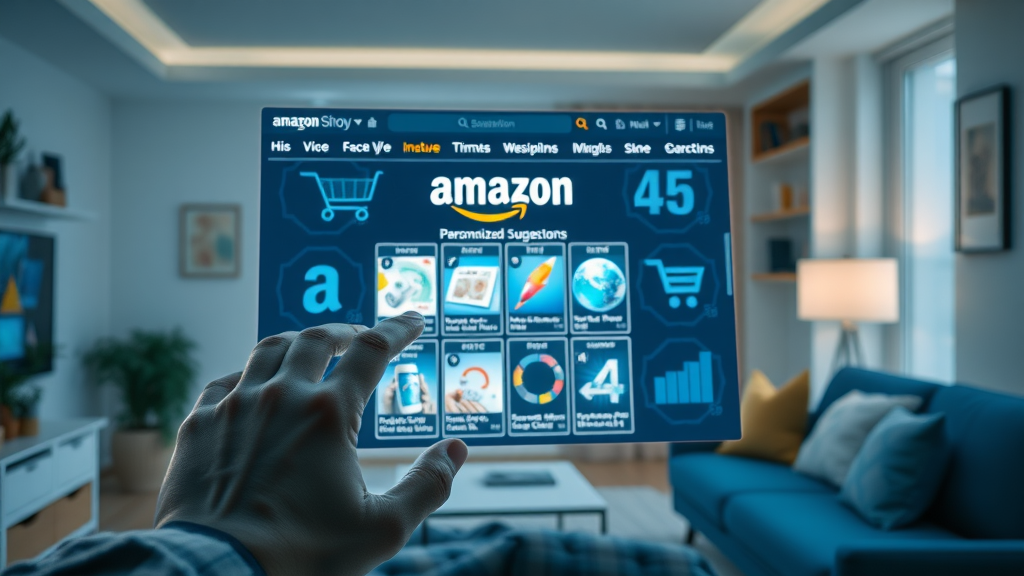
Amazon is a global benchmark for personalization with AI marketing. The retail giant relies on advanced machine learning and AI algorithms to track every aspect of customer behavior. Every click, search, purchase, and even browsing time feeds into a vast data ecosystem, powering real-time product recommendations, customized homepage displays, and tailored email campaigns. This relentless data analysis means Amazon customers rarely see the same page twice—every visit feels uniquely designed for them.
Amazon’s AI toolset includes collaborative filtering (predicting preferences by comparing users with similar profiles), generative AI for customized content, and predictive analytics for inventory and pricing. The result is a highly engaging experience that keeps users coming back. Over time, these personalization tactics have contributed to Amazon’s industry-leading retention rates, high conversion rate, and astonishing sales growth. Other brands can learn from Amazon’s commitment to testing, optimizing, and scaling AI personalization at every customer touchpoint.
Case Study: Targeted Product Recommendations Drive E-commerce Sales
Many e-commerce brands have harnessed personalization with AI marketing to boost sales and streamline the customer journey. Take the example of a large online retailer that implemented an AI-powered recommendation engine. By analyzing customer data in real time and applying predictive machine learning models, the company began delivering ultra-specific product reco on its site and via email. Customers not only found what they needed faster—they discovered complementary products they didn’t know they wanted, driving up average order value.
The impact was immediate: bounce rates dropped, conversion rates climbed, and customer engagement soared. By closely monitoring performance metrics and refining their marketing campaigns, the retailer continued to optimize the experience, resulting in industry-leading retention and customer satisfaction. This case illustrates how AI-driven personalized marketing can deliver tangible business results in any sector willing to invest in powered personalization.
| Brand | Conversion Rate Uplift | Customer Retention | Avg. Order Value Increase |
|---|---|---|---|
| Amazon | +7% | 90% | +10% |
| Leading E-commerce Retailer | +5% | 85% | +8% |
| Digital Streaming Service | +4% | 80% | +5% |
Addressing Data Privacy and Ethics in Personalization with AI Marketing
As personalization with AI marketing grows more sophisticated, so too does the focus on data privacy and ethics. With vast amounts of sensitive customer data in play, companies must balance hyper-personalization with robust safeguards. Data privacy regulations like GDPR and CCPA require transparency, secure data handling, and respect for user consent. Marketers deploying AI tools must ensure that data collection and processing methodologies align with these standards—or risk reputational and legal consequences.
Furthermore, maintaining consumer trust means going beyond compliance—it’s about respecting customer boundaries and ensuring that personalized marketing never feels invasive. Striking this balance is essential for sustainable powered personalization and long-term customer loyalty.

Regulatory Environment: Consumer Data Privacy Laws
Today’s marketers must navigate a complex web of regulations governing data privacy. Laws like the EU’s GDPR, California’s CCPA, and similar statutes elsewhere require companies to disclose what data they collect, how they use it, and secure explicit consent for personalized marketing. Companies must also offer easy opt-out mechanisms and ensure data is stored securely. Failing to comply can result in significant fines, loss of consumer trust, and lasting brand damage.
Compliance isn’t just about legal protection—it’s foundational to customer experience. Customers need to trust that brands will handle their information with care and transparency. Clear privacy policies, robust security practices, and accessible consent forms all contribute to this trust, enabling the ongoing success of personalization with AI marketing.
Ethical Considerations: Striking the Balance in Personalized Experiences
Beyond regulations, ethical personalized marketing requires respecting user boundaries, avoiding manipulation, and being transparent about data usage. Over-personalization, or “creepiness,” can erode trust and backfire—especially if AI recommendations feel invasive or unwelcome. Successful brands make it a priority to empower users with control over their information, clearly communicating the benefits of data sharing and maintaining high ethical standards throughout every marketing campaign.
Incorporate feedback loops, let customers manage their personalization settings, and always err on the side of caution when handling sensitive information. By making ethics a central pillar of your AI personalization efforts, you establish stronger relationships with your audience and pave the way for sustainable success.
"Transparency and consent are critical for successful AI marketing personalization." – Privacy Advocate
Emerging Trends: The Future of Personalization with AI Marketing
The future of personalization with AI marketing is thrilling—driven by innovations in generative AI, hyper-personalized chatbots, and predictive analytics that deliver proactive, context-aware experiences. As these technologies mature, expect even tighter integration between customer data sources, real-time feedback, and channel automation. The next frontier includes full-scale, automated content generation and conversational AI that adapts to emotional cues, taking customer experience to a new level.
Staying ahead of these trends helps brands differentiate, delight, and retain increasingly savvy customers. Below, we explore the biggest trends shaping the future of personalized marketing and the tools you’ll need to lead in your industry.
Generative AI: Pioneering Content Personalization
Generative AI is transforming the way brands create and deliver content. By learning from millions of data points, these engines generate fresh, unique images, videos, and text that perfectly match each customer’s interests. Imagine AI tools automatically creating a blog post for one user, a personalized video ad for another, or even ultra-targeted memes on social media—all adapting lifecycle marketing in real time. This level of personalization not only deepens engagement but also consistently surprises and delights customers, multiplying touchpoints for brand interaction.
The potential of generative AI extends beyond content. Brands can leverage it to prototype new products, customize experiences for micro-audiences, and rapidly scale creative output for large campaigns. As this technology becomes more accessible, marketers who harness its flexibility and insight will set the pace for the next wave of customer experience innovation.
AI-Powered Chatbots: Next-Level Customer Experience
AI-powered chatbots are rapidly maturing from simple question-answer bots to intelligent, context-aware agents. These chatbots not only support sales and customer service but also guide users through purchasing decisions, offer product recommendations, and provide proactive support—even before the customer requests help. Brands using powered chatbots see higher customer engagement, lower response times, and greater satisfaction thanks to 24/7 personalized support.
Advanced chatbots leverage natural language processing, sentiment analysis, and deep learning to offer conversational experiences that feel personal and authentic. As AI tools grow more sophisticated, these bots will increasingly manage complex customer journeys, delivering seamless transitions between marketing, sales, and service—all with a unified, data-rich understanding of each customer.
Predictive Analytics and Proactive Personalized Marketing
Predictive analytics is taking personalization with AI marketing to a new level by anticipating what customers want before they act. By analyzing historical behavior, purchase triggers, and macro trends, AI tools can launch targeted offers, reminders, and product reco at critical points in the customer journey. This proactive approach catches consumer intent early, increasing the effectiveness of marketing campaigns and boosting conversion rates.
Predictive analytics is also key for retention. By flagging potential churn based on behavior changes, AI marketing systems can intervene with special offers, tailored messaging, or personalized experiences designed to re-engage and keep users happy. With greater focus on real-time data and ongoing optimization, proactive marketing will become the gold standard for powered personalization in the years ahead.
People Also Ask: Personalization with AI Marketing
What is personalization in AI marketing?
Personalization in AI marketing refers to the use of artificial intelligence, particularly machine learning and data-driven algorithms, to tailor experiences, offers, and content to individual customers at scale. This process analyzes customer data to deliver relevant messaging and products, optimizing both customer satisfaction and conversion rates.
What are the 4 D's of personalization?
The 4 D's of personalization are Data, Decisioning, Delivery, and Design. These pillars ensure that AI-powered personalization leverages customer data, makes intelligent decisions, delivers tailored content, and designs seamless user experiences.
How does Amazon use AI for personalization?
Amazon uses personalization with AI marketing through advanced recommendation algorithms, machine learning, and predictive analytics. These technologies analyze customer behaviors and preferences, delivering product recommendations, personalized emails, and dynamic web content that adapt in real time.
What is an example of a company using personalized AI ads?
Spotify utilizes personalization with AI marketing to serve highly targeted advertisements and playlists. By analyzing listener data and behavior, Spotify's AI delivers customized ad experiences and music recommendations, enhancing user engagement and retention.
FAQs: Personalization with AI Marketing
-
How can small businesses get started with personalization with AI marketing?
Start by integrating customer data from different channels into a centralized CRM or marketing platform. Choose user-friendly AI tools designed for small business needs, experiment with basic segmentation and product recommendations, and scale as you gain confidence. -
What are the most effective AI personalization tools?
Popular options include Salesforce Einstein, Adobe Sensei, Dynamic Yield, and HubSpot’s AI-powered personalization suite. Select tools that integrate with your existing systems and support real-time data analysis for marketing campaigns. -
Does AI personalization compromise data privacy?
Not if managed properly. Ensure data is securely collected, stored with consent, and processed transparently. Follow data privacy regulations and allow customers to update or remove their data at any time to maintain trust. -
How does machine learning improve customer experience in marketing?
Machine learning analyzes patterns and behaviors, enabling brands to predict needs and deliver personalized messaging, offers, and recommendations automatically—enhancing satisfaction and loyalty. -
What metrics show the ROI of personalization with AI marketing?
Key metrics include conversion rate, average order value, customer retention, click-through rate, and customer satisfaction scores. Monitoring these KPIs helps gauge the effectiveness and profitability of AI personalization efforts.
Key Takeaways on Personalization with AI Marketing
- Personalization with AI marketing transforms customer experience and increases sales.
- Leveraging customer data and machine learning is essential for effective powered personalization.
- Balancing data privacy and ethical concerns is crucial as AI-powered marketing expands.
- Generative AI and chatbots represent the next frontier in personalized experiences.
Conclusion: Accelerate Growth with Personalization with AI Marketing
The Time to Act Is Now—Start Personalizing, Start Winning
Don’t let your competitors leave you behind—embrace personalization with AI marketing to accelerate growth, deepen customer relationships, and drive impressive results now.




Write A Comment